
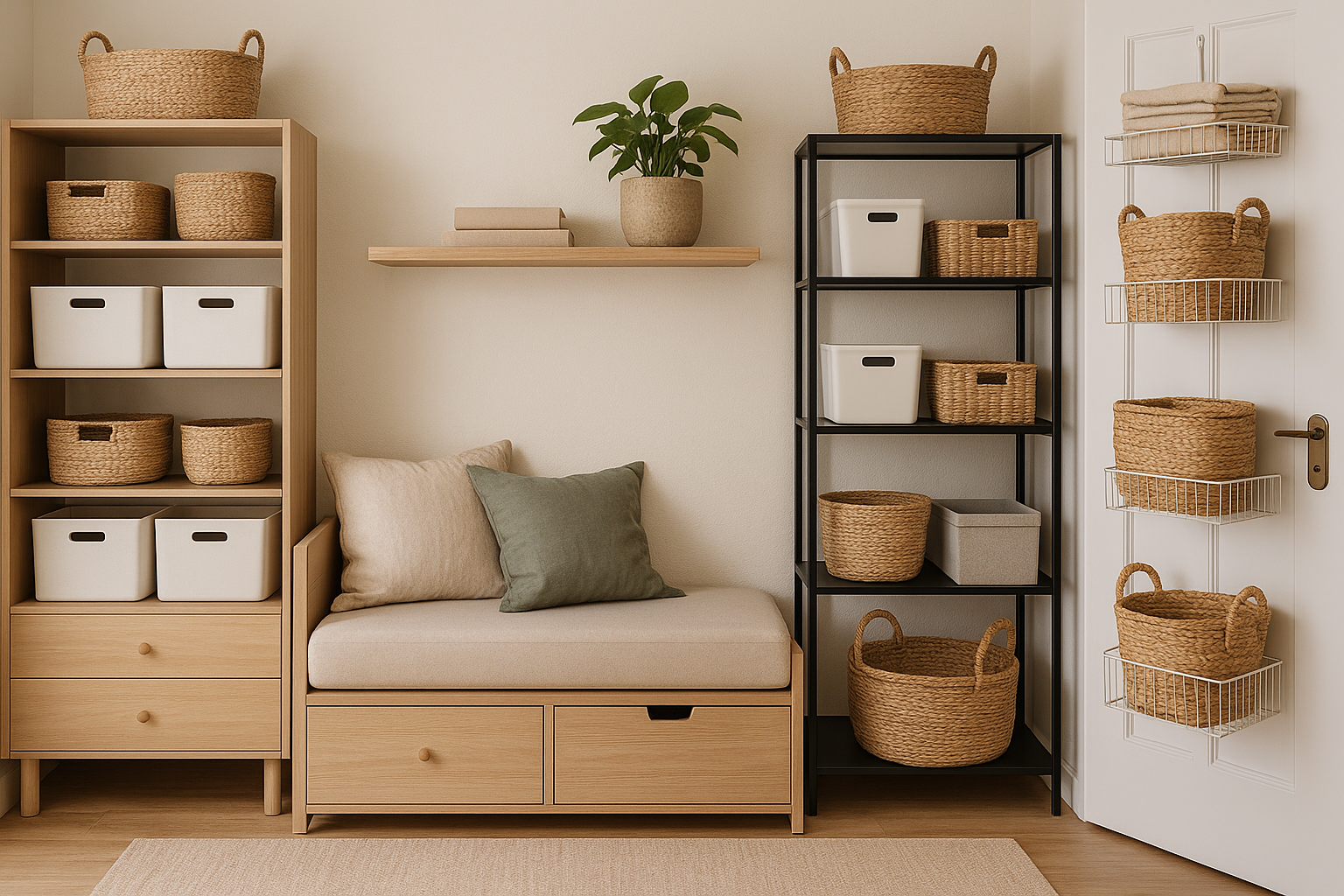
Living in a small home or apartment doesn’t mean you have to sacrifice comfort or organization. With smart planning and a little creativity, even the tiniest spaces can be transformed into functional and clutter-free environments.
The key is to make every inch count while maintaining a clean, visually calming atmosphere. In this comprehensive guide, you’ll discover practical tips and creative storage ideas to help you organize your home, no matter how limited the square footage.
The Challenges of Small Spaces
Smaller living areas often come with unique challenges, including:
- Limited closet and cabinet space
- Lack of extra rooms or hidden storage areas
- Minimal surfaces for decor or essentials
- Clutter buildup from daily use
- Shared areas used for multiple purposes (e.g., living room as office)
Understanding these challenges helps you identify which solutions are most important for your home.
Start with Decluttering
Before adding storage, reduce the number of items you need to store. Decluttering is the most important first step in organizing any small space.
Tips for efficient decluttering:
- Set a timer and work in 15-minute zones
- Use three categories: Keep, Donate, Discard
- Ask: “Do I use this weekly, monthly, or ever?”
- Eliminate duplicates (e.g., three can openers)
- Be honest—less stuff = more space
Decluttering creates breathing room and ensures your storage efforts are focused on things that truly matter.
Use Vertical Space Wisely
In small spaces, think up, not out. Most homes have plenty of unused vertical space.
Ideas for vertical storage:
- Wall-mounted shelves: above desks, beds, or doors
- Tall bookcases: go all the way to the ceiling
- Pegboards: for tools, crafts, kitchen utensils
- Over-the-door racks: for shoes, spices, cleaning supplies
- Hooks and rails: for bags, coats, hats, kitchen gear
Vertical storage lifts clutter off the floor and turns walls into usable real estate.
Invest in Multi-Functional Furniture
Multi-functional furniture can dramatically reduce the need for separate storage units.
Top picks:
- Ottomans with hidden storage
- Beds with drawers underneath
- Coffee tables with shelves or lift-up tops
- Fold-out desks and wall-mounted workstations
- Convertible sofas or daybeds with compartments
Choose pieces that serve dual purposes and suit your lifestyle, such as seating with storage for blankets, or a table that doubles as a workspace.
Create “Zones” Within Rooms
Small rooms often serve multiple functions. Defining zones within a space helps keep it organized and intentional.
For example:
- A living room corner becomes a home office with a desk and vertical shelving
- A hallway can become a mini-mudroom with hooks and a bench
- A bedroom can include a reading nook with a chair and basket
Use rugs, curtains, shelving, or lighting to visually separate zones.
Use Clear or Labeled Storage Bins
Storage bins are essential, but they must be functional. Choose clear bins so you can see the contents, or label opaque bins clearly.
Best practices:
- Store items by category (seasonal clothes, craft supplies, tech cables)
- Use stackable bins to save space
- Label front and top of each bin
- Store seldom-used items in harder-to-reach spots
Bins keep items contained and prevent chaos in closets, cabinets, and under beds.
Maximize Closet Space
Closets can be goldmines for organization—if used wisely.
Closet tips:
- Use double rods to hang twice as much clothing
- Add a shoe rack at the bottom
- Hang accessories on door hooks or a pegboard
- Use hanging organizers for bags or folded items
- Use slim hangers to save space
A well-designed closet can hold much more than just clothes.
Make Use of Hidden Spaces
Many homes have hidden storage potential that goes unnoticed.
Search for:
- Under the bed: perfect for low-profile bins or rolling drawers
- Behind doors: add pocket organizers or hooks
- Above kitchen cabinets: store extra paper towels, cookware, or pantry items
- Inside furniture: remove couch cushions and store items in built-in compartments
- Under stairs: add drawers, shelves, or a mini office
These overlooked spaces can hold items you don’t need daily but want nearby.
Keep Countertops and Surfaces Clear
In small spaces, visual clutter makes a room feel even smaller. Clear surfaces make your space feel bigger and more calming.
How to keep them clear:
- Mount items on walls instead of placing them on tables
- Use trays to group items (candles, remotes, toiletries)
- Store mail and keys in a wall-mounted entryway station
- Limit decor to one or two pieces per surface
Make it a habit to reset surfaces each night before bed.
Create a Storage Plan for Each Room
Take inventory of what’s used and stored in each room, then develop a plan.
Living room:
- Use baskets for throws, remotes, and books
- Choose furniture with built-in storage
- Add floating shelves for books or decor
Bedroom:
- Under-bed drawers for clothing or linens
- Nightstands with drawers instead of open tables
- Hanging organizers for accessories or shoes
Bathroom:
- Use over-the-toilet shelves
- Add a wall shelf above the door
- Store daily products in baskets under the sink
Kitchen:
- Use tiered shelves in cabinets
- Mount pot racks or magnetic knife holders
- Store small appliances in pull-out drawers
By designing each room with purpose, you maximize space without sacrificing comfort.
Rotate Seasonal Items
Avoid overcrowding by storing off-season items elsewhere.
Tips:
- Store winter coats, scarves, and boots during summer
- Pack holiday decor into labeled bins and place on high shelves
- Use vacuum-sealed bags for bulky blankets and jackets
Rotating items reduces daily clutter and makes space feel more open.
Use Furniture Placement to Enhance Flow
Furniture should support movement and comfort—not block it. In tight quarters, arrange furniture with intention.
Do:
- Float furniture away from walls to create depth
- Use small-scale pieces suited to the room size
- Avoid placing furniture where you walk frequently
- Place mirrors to reflect light and make rooms feel larger
Efficient layouts make your home feel more spacious and easier to clean.
Use Light and Color to Your Advantage
Visual tricks can make a small room feel bigger and brighter.
Tips:
- Use light-colored walls and curtains
- Add mirrors to reflect light and open the space
- Choose storage bins and furniture in soft neutrals
- Avoid overly bold patterns that make rooms feel busy
Bright, airy environments feel less cramped and more peaceful.
Keep Daily-Use Items Easily Accessible
Items you use every day should be stored where you can grab them without digging.
Examples:
- Keep keys and wallets in a tray by the door
- Use drawer organizers for daily toiletries or office supplies
- Store reusable bags near the door for grocery runs
- Keep a “go-bag” in a designated place if you commute
The easier it is to access something, the more likely you are to keep things organized.
Create a Weekly Reset Routine
Once a week, spend 15–30 minutes resetting your space. This prevents small clutter from becoming overwhelming.
Weekly tasks:
- Return misplaced items to their homes
- Wipe down high-traffic surfaces
- Refill organizing bins (e.g., snacks, office supplies)
- Vacuum and sweep under furniture
This habit helps maintain order without constant effort.
Final Thoughts: Small Spaces, Big Potential
Living in a small home doesn’t mean sacrificing organization or comfort. With thoughtful planning, creative storage solutions, and a few smart purchases, you can turn any tight space into a highly functional and beautiful environment.
Organization is not about having more containers—it’s about having systems that work for your lifestyle. Use every inch, think vertically, and reduce what you don’t need. A small, well-organized space can feel more spacious than a cluttered large one.
